Not Worth The Trip
A research-led strategic case study exploring how Zepto could move beyond the 10-minute delivery promise and own a more relevant form of urban convenience.
Beyond ten minutes — toward everyday urban convenience.
A research-led strategic case study exploring how Zepto could move beyond the 10-minute delivery promise and own a more relevant form of urban convenience. This is an independent strategic exercise, developed to demonstrate the thinking required to take a category brief from research through to a campaign platform.
From quick commerce to everyday urban convenience.
The strategic context begins with a limitation: a promise built around speed — the 10-minute delivery claim — can only describe a functional benefit. As quick commerce normalises across Indian cities, delivery windows shrink from a differentiator into a table stake.
The opportunity is to look beyond the functional promise and ask a more human question: what does convenience genuinely mean in the rhythm of an urban life? Moving the brand from being the fastest way to get something, to being the least trouble way to live the day.
The category had already moved beyond emergency shopping.
The research foundation starts from the observation that rapid-delivery platforms were initially framed around emergencies — running out of something at the wrong moment. In practice, category behaviour has moved toward the everyday: small replenishments, missing ingredients, a single item that never seemed worth a full trip.
Category behaviour
Frequent, small, low-stakes orders rather than planned shops.
Consumer expectations
Speed is expected; effortlessness is what people feel.
Urban friction
Friction of leaving home for one small thing.
Convenience
Convenience felt as fewer errands, not shorter timers.
The category was competing on familiar convenience cues.
Competitive positioning and creative communication were reviewed to identify common category territory. The audit looked at the shared language and imagery the category relies on — speed, quick delivery windows, urgency-driven cues — to surface where the category was already speaking in the same voice.
Small need. Disproportionate journey.
This is the central strategic tension of the case study. The need being served is genuinely small — an ingredient, a charger, a snack, one item — yet satisfying it asks for a disproportionately large effort: getting ready, leaving, walking, waiting, returning.
From laziness to unnecessary effort.
The re-frame resists moralising the consumer. The audience is not lazy; they are reasonable people making reasonable decisions about how to spend energy they do not have. The opportunity is to recognise the unnecessary effort hidden in everyday urban life — the outing that was never worth the trip.
Not Worth The Trip.
This is the central campaign platform. The idea is built around situations where the thing someone needs is simply not worth leaving home for. It re-frames Zepto as relief from unnecessary effort rather than just a fast delivery service.
Turn small frustrations into recognisable moments.
Rather than a one-off advertisement, the platform is expressed as a repeatable creative system. Because it is built from situations, it can generate multiple lines of idea rather than a single execution.
Make the idea feel native to the city.
The platform is designed to localise so that it feels borrowed, not transplanted. Each market re-expresses "Not Worth The Trip" in the texture of its own city and its own everyday frustrations.
Mumbai / Marathi
Local execution expressed through familiar Mumbai daily journeys and Marathi-language recognisable moments.
Delhi-NCR / Hindi
Local execution expressed through Delhi-NCR daily friction and Hindi-language recognisable moments.
Turn everyday frustrations into participation.
The proposed activation invites real customers to share their own "not worth the trip" frustrations and stories, turning the platform from a message into participation. This is a proposed strategic activation concept, not a campaign that has run.
Measure the response, not just the reach.
Proposed measurement dimensions focus on whether the idea changes behaviour — not only how many people saw it. These are proposed dimensions rather than reported results.
From research to a campaign platform.
The strategic synthesis connects the whole path in one line: category research reveals everyday need, competitive audit finds familiar territory, a discovered tension delivers the re-frame, and a campaign platform turns it into one simple recognisable idea.
Read the complete investigation.
The complete 17-slide independent research deck behind this strategic case study — covering the market context, consumer research, competitive landscape, strategic tension, re-frame, creative system, localisation, activation and measurement considerations in full.
View the full PDF research deck →From research to a campaign platform.
A visual walkthrough of the strategic process — from market reset and consumer research, through the tension and re-frame, to the creative system and the final strategic synthesis.
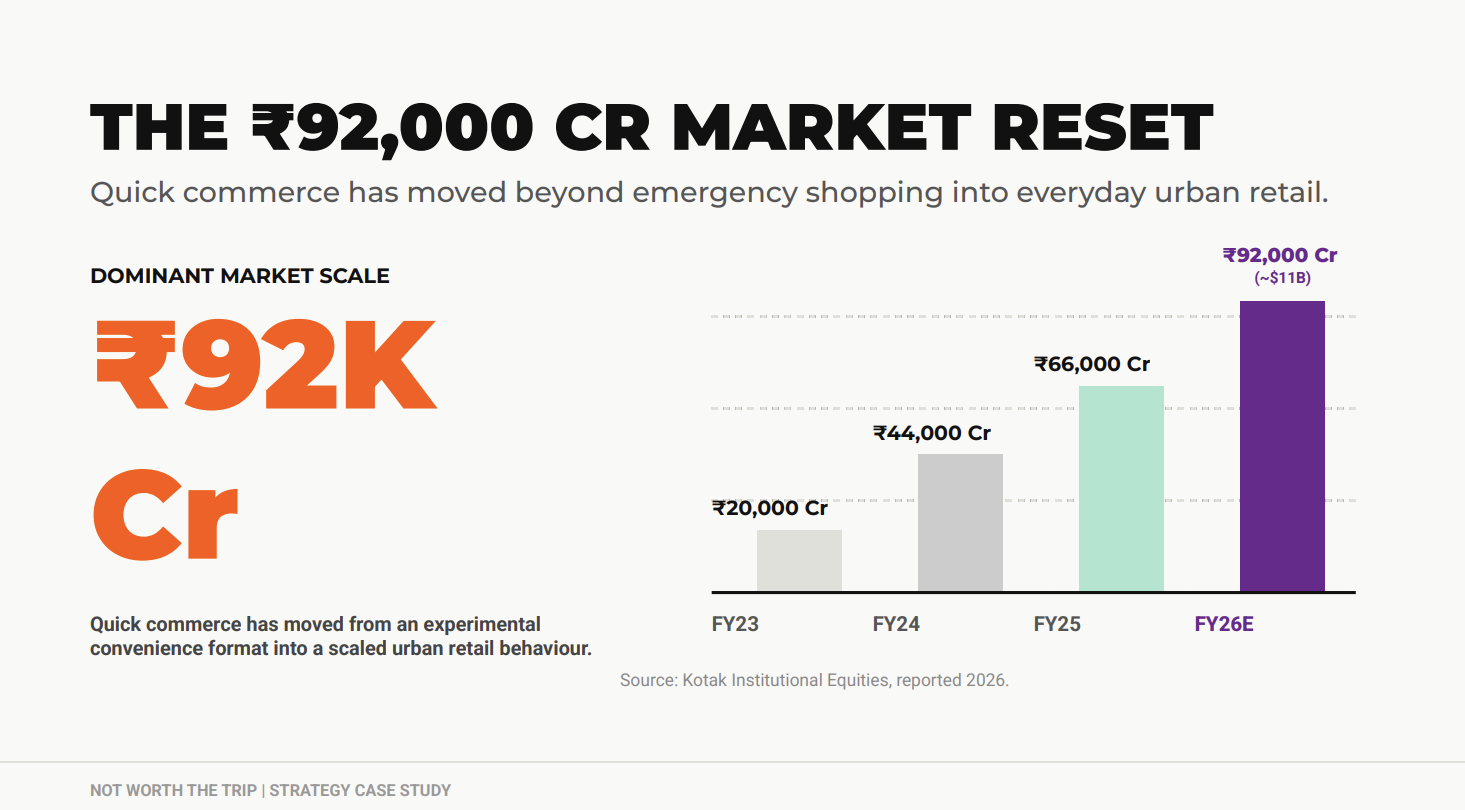
Category and market context.
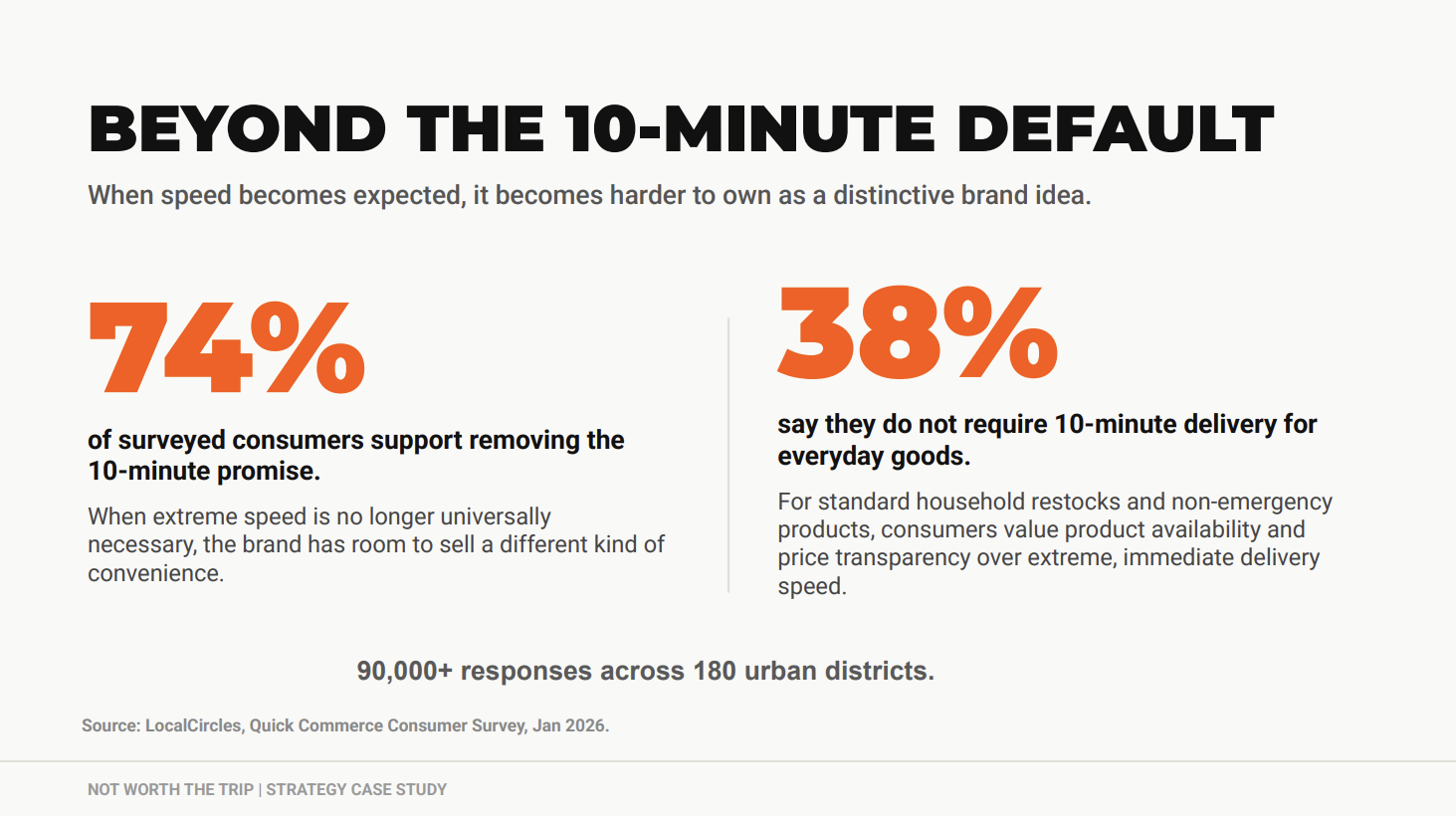
Consumer behaviour and urban friction signals.
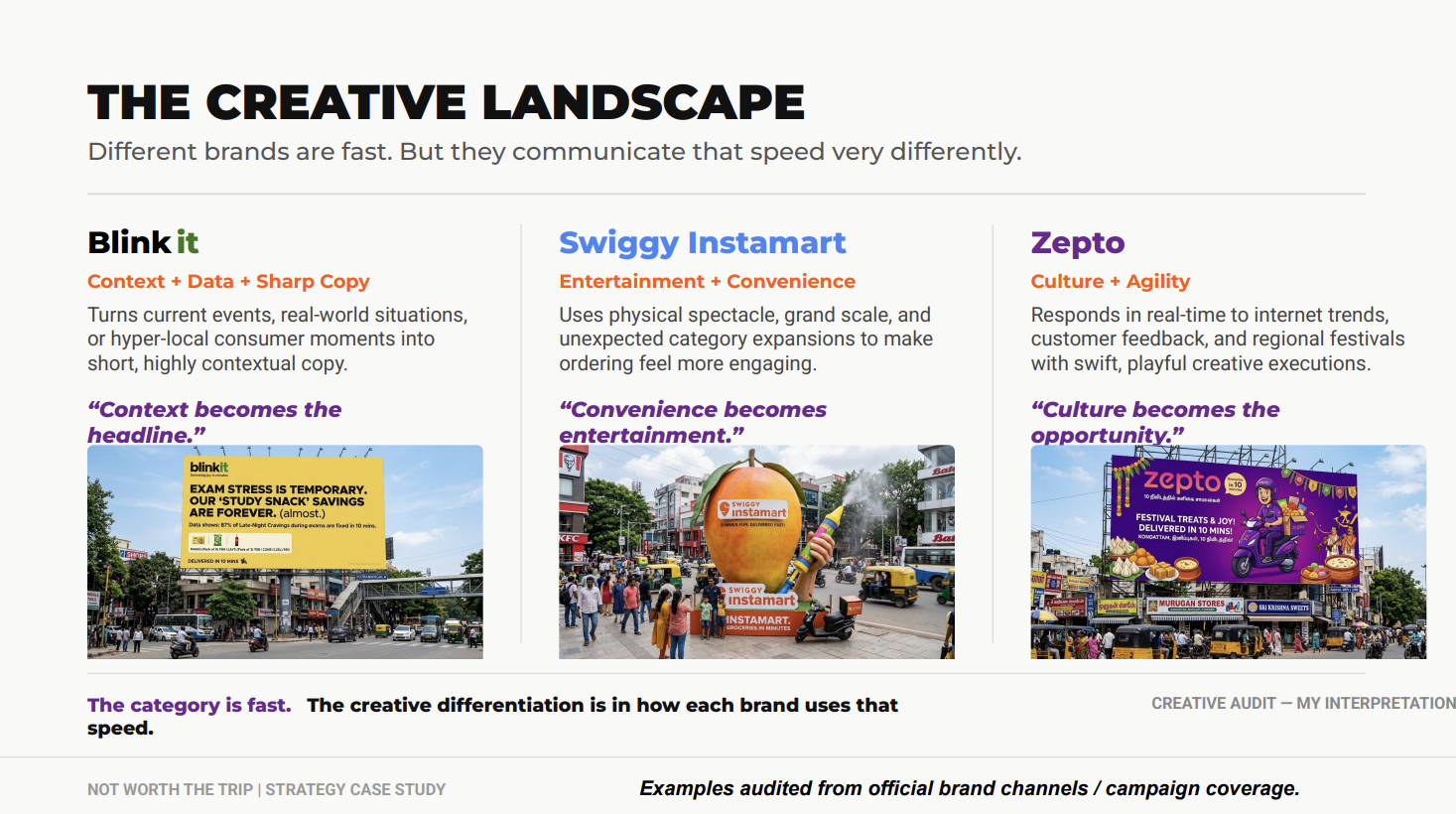
Category positioning and creative territory.
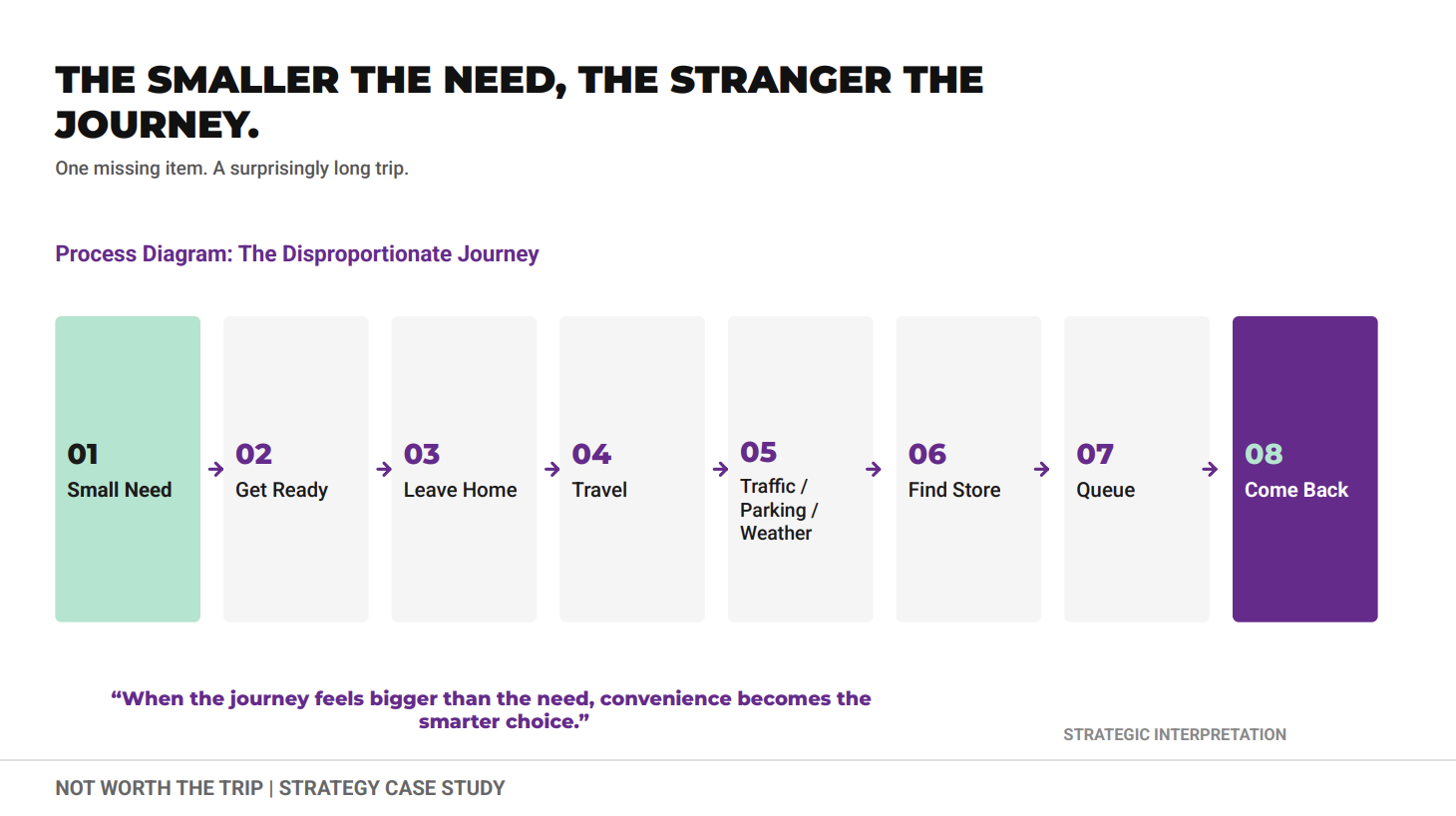
The strategic consumer tension.
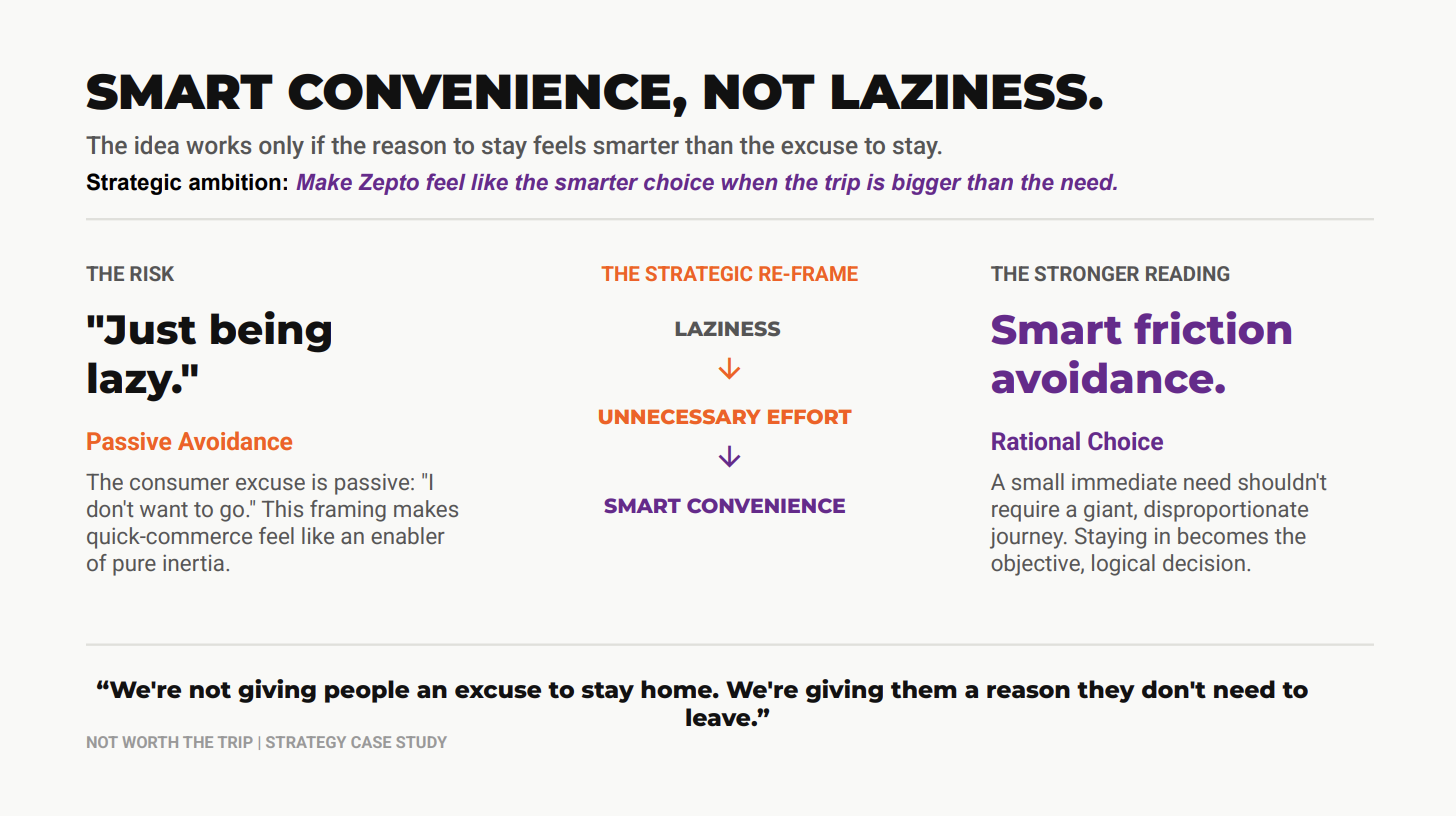
From laziness to unnecessary effort.
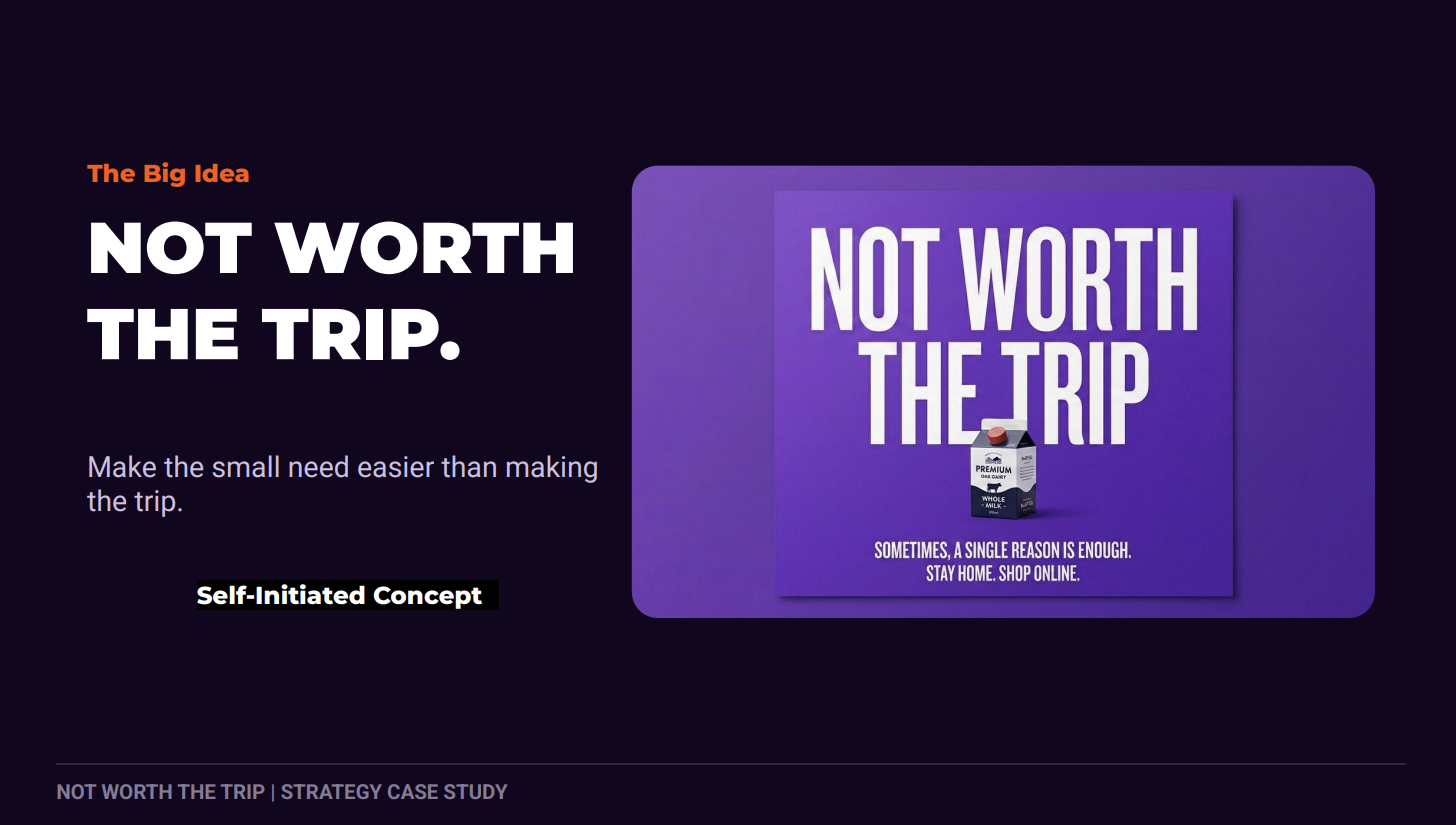
Not Worth The Trip.
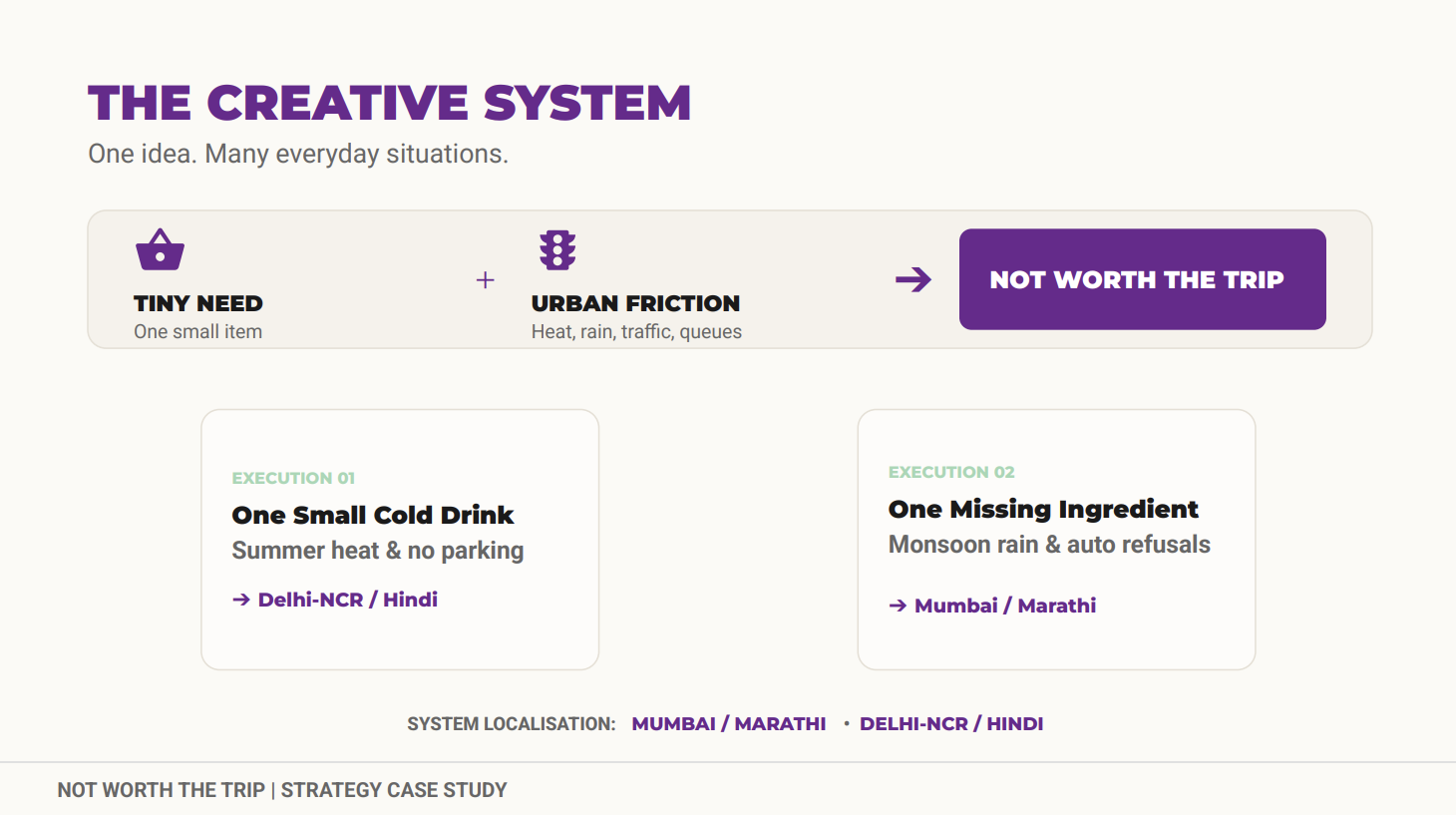
A repeatable formula built around tiny needs and urban friction.
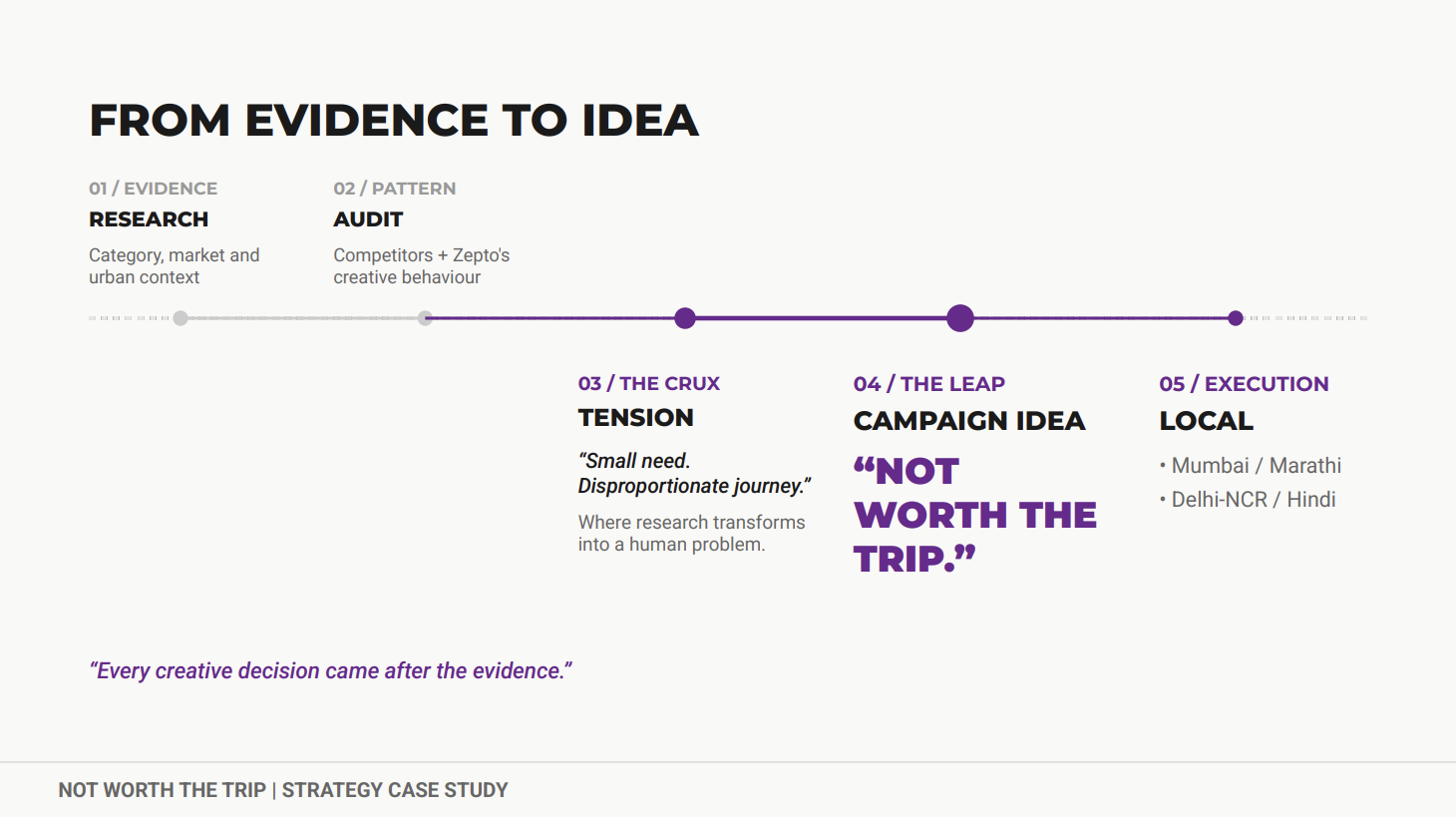
The strategic path from research to campaign platform.