Retention Engine
A Notion operating system for managing clients, projects, retention, strategy, analytics and delivery.
One workspace for running the agency.
Retention Engine is a Notion operating system for managing clients, projects, content production, profitability, reporting and delivery — organised so the day-to-day of agency work lives in one place.
Context
Agency work often gets fragmented across project boards, client databases, content calendars, reporting documents and financial trackers. Retention Engine was designed as a single operating layer that connects these moving parts into one workspace.
The system brings client relationships, project delivery, content production, performance tracking and financial visibility into a connected operational structure.
The problem
As an agency grows, operational information tends to spread across disconnected tools and views. Projects live separately from client context, content production from delivery, and financial tracking from day-to-day execution.
The result is more manual coordination, less visibility and a higher risk of losing important context between teams, projects and clients.
Objective
The objective was to create one operating system that could give an agency a clear view of what is happening, who owns it, which client or project it belongs to, and how delivery connects to business performance.
The system needed to support both daily execution and higher-level operational visibility without turning the workspace into a collection of disconnected databases.
Research / Approach
I mapped the recurring operational layers of agency work and organized them into connected workspaces rather than isolated trackers.
The system was structured around five core areas: pipeline and projects, client management, content production, strategy and analytics, with database relationships connecting the operational layer underneath.
Each workspace was designed around a specific decision or workflow rather than simply storing information.
Key findings
The system revealed that the main operational challenge is not the absence of information, but the separation of information.
Client context influences projects. Projects generate production tasks. Production feeds reporting. Reporting informs strategy. Financial tracking adds the business layer needed to understand whether delivery is sustainable.
Connecting these relationships creates a more useful operational picture than maintaining separate trackers for each function.
Strategic thinking
The core design principle was to treat the agency as one connected system rather than a collection of workflows.
Instead of creating a separate tool for every operational problem, Retention Engine uses connected databases and purpose-built views to surface the same underlying information from different perspectives.
This makes the system adaptable: the same project, client or task can appear where it is operationally relevant without duplicating the underlying data.
Solution / System / Execution
Six connected workspaces form the operational layer of the system.
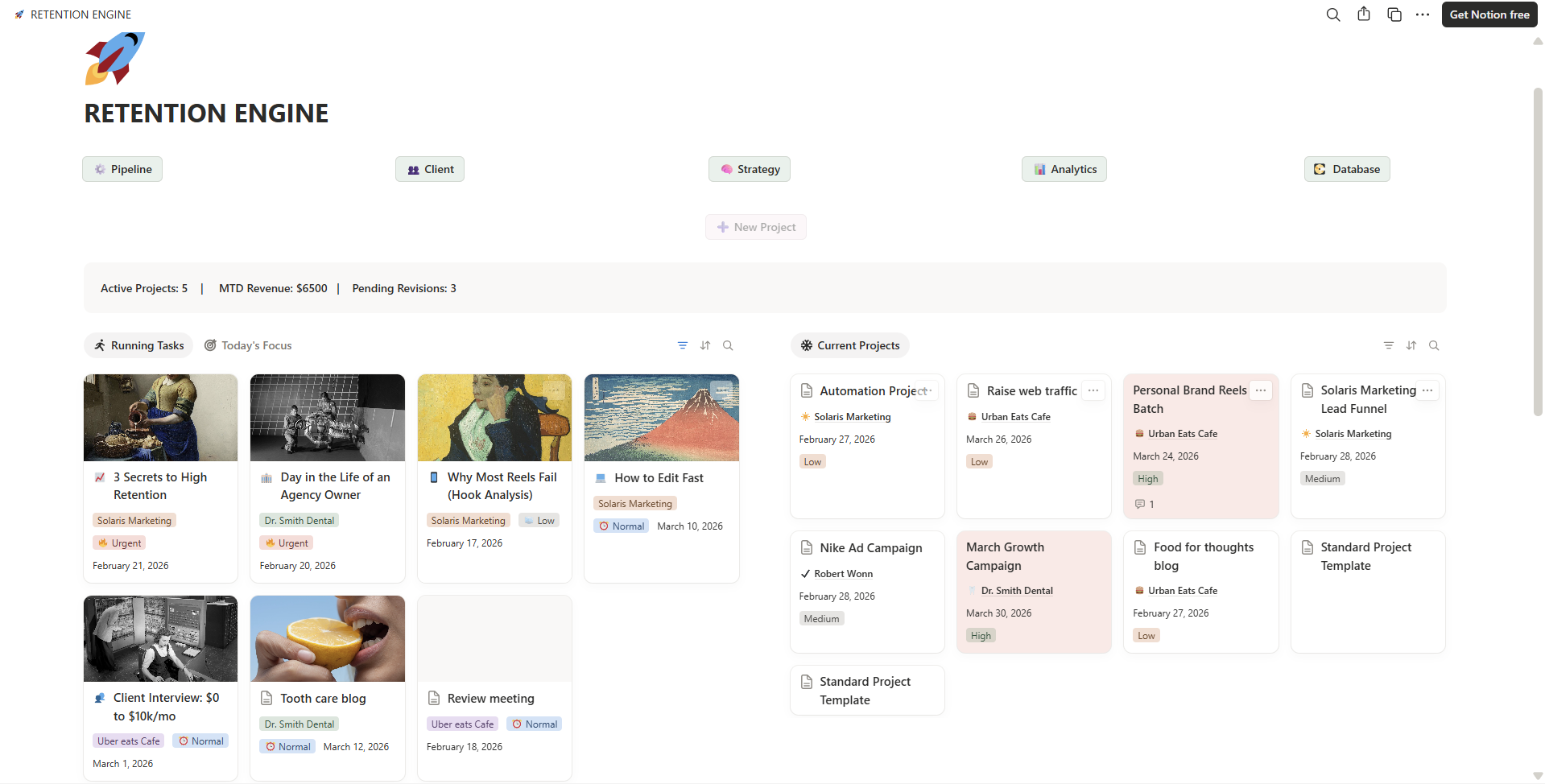
The operational overview connecting the major areas of the system.
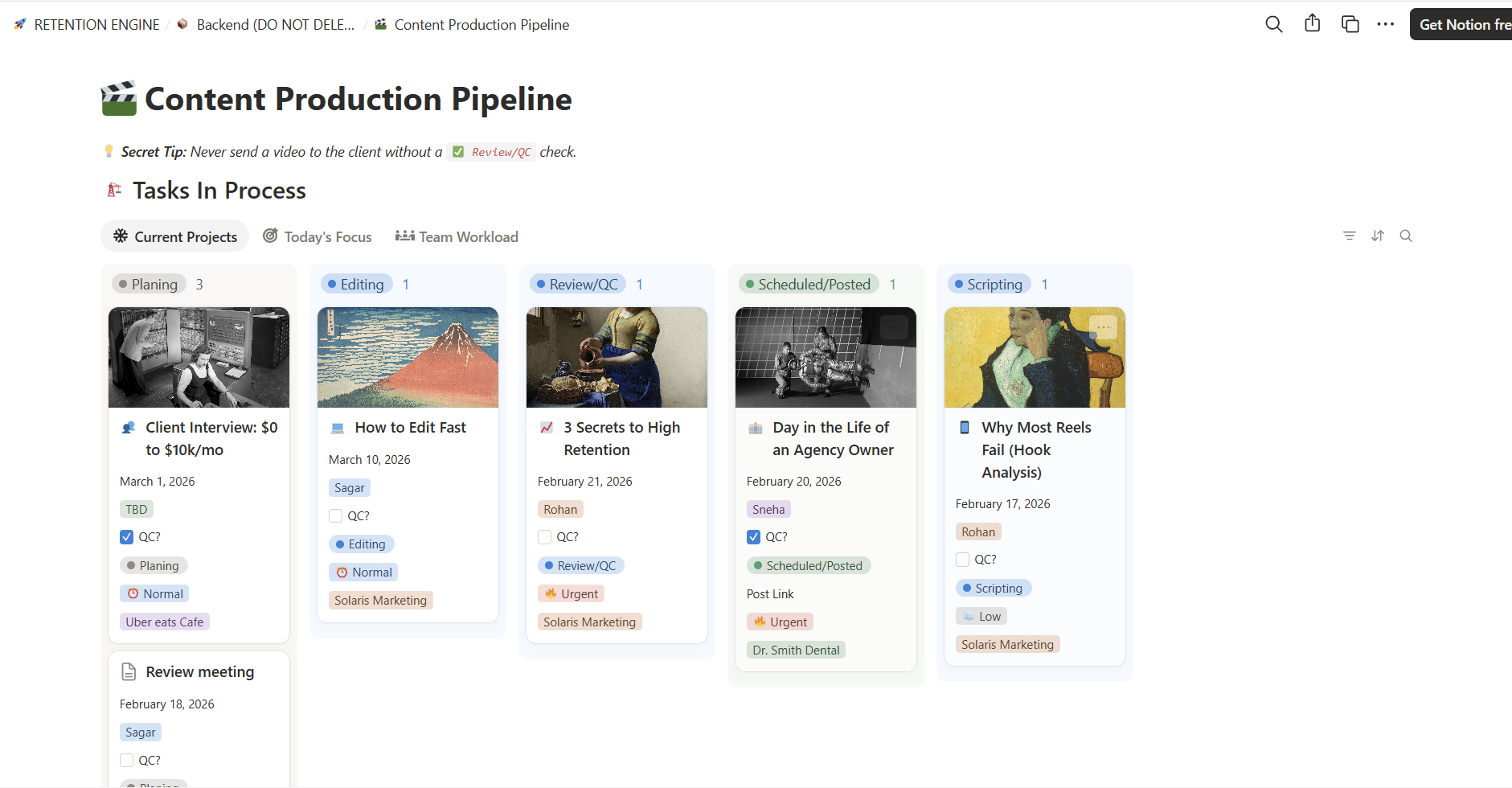
Content work tracked from planning and scripting through review and delivery.
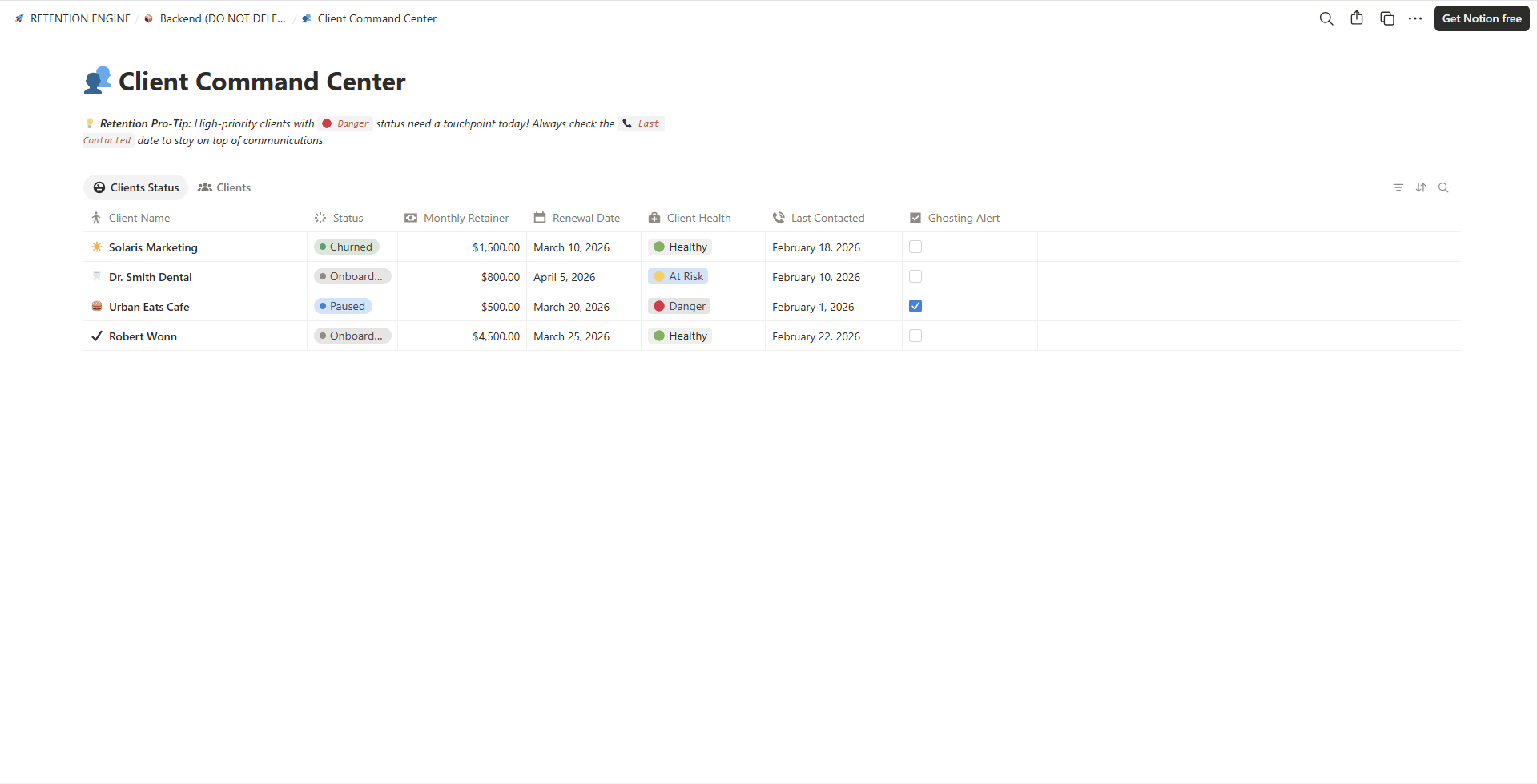
A centralized view of client status, health and communication activity.
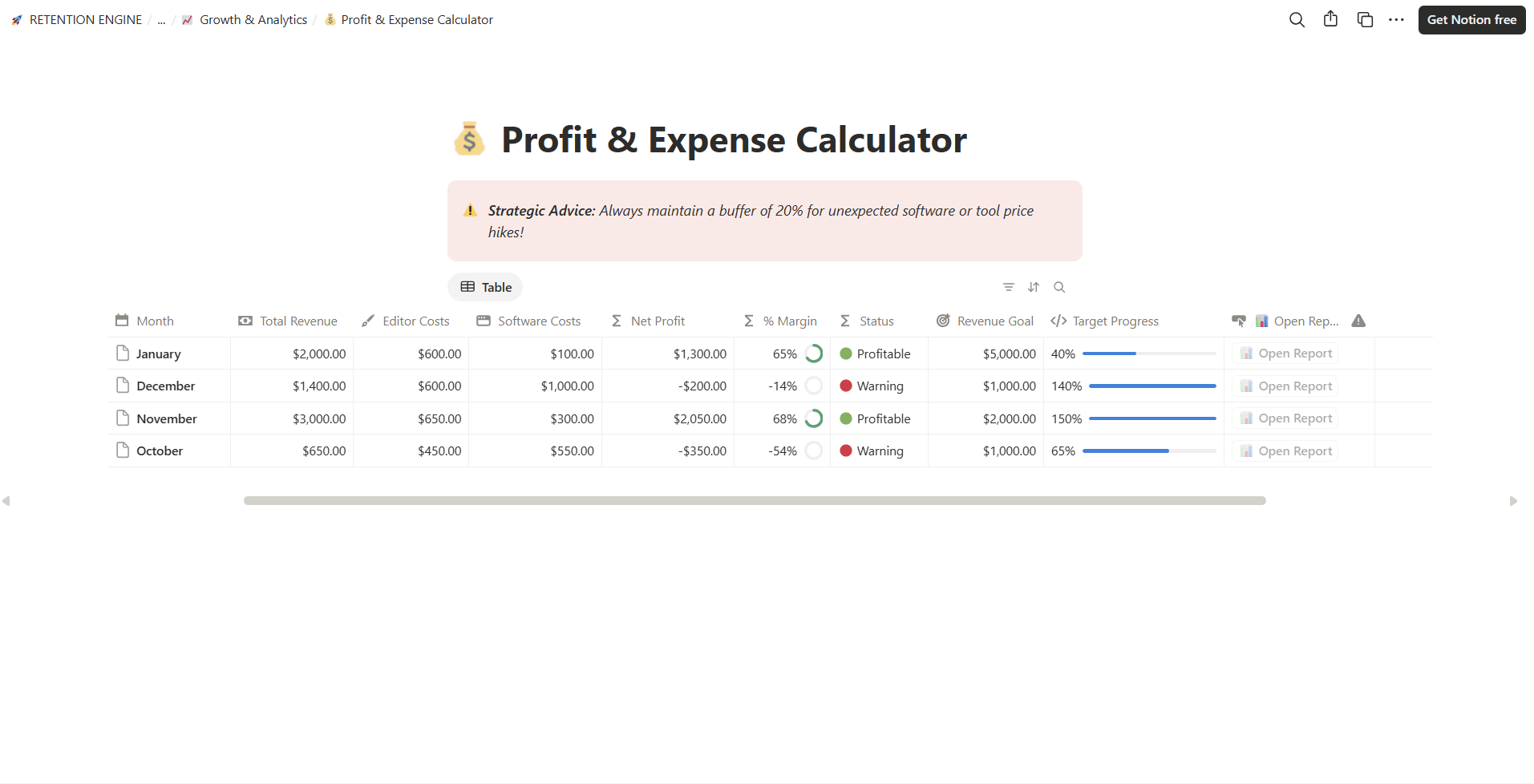
Revenue, operating costs, margins and financial targets in one view.
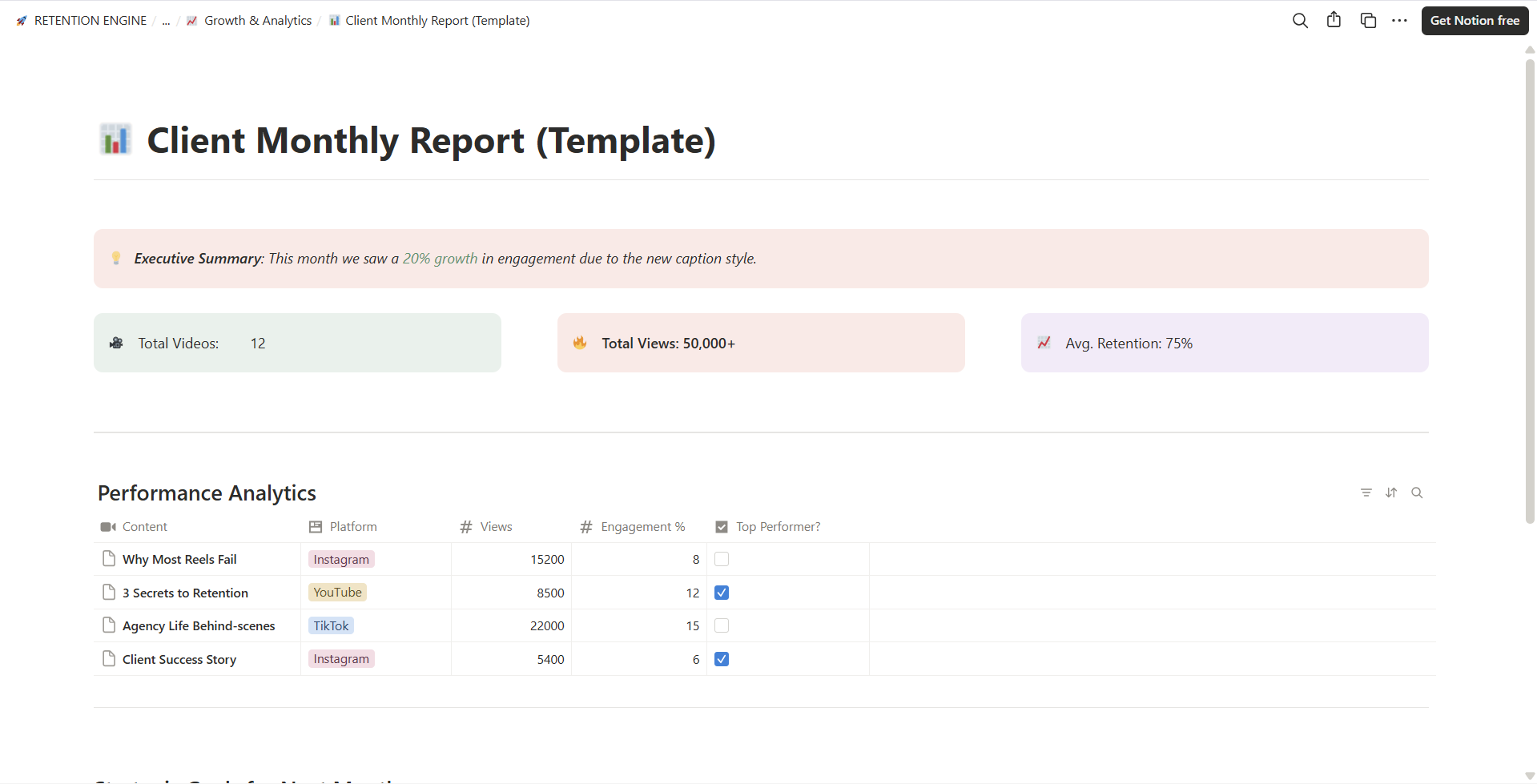
A structured reporting interface for presenting client performance.
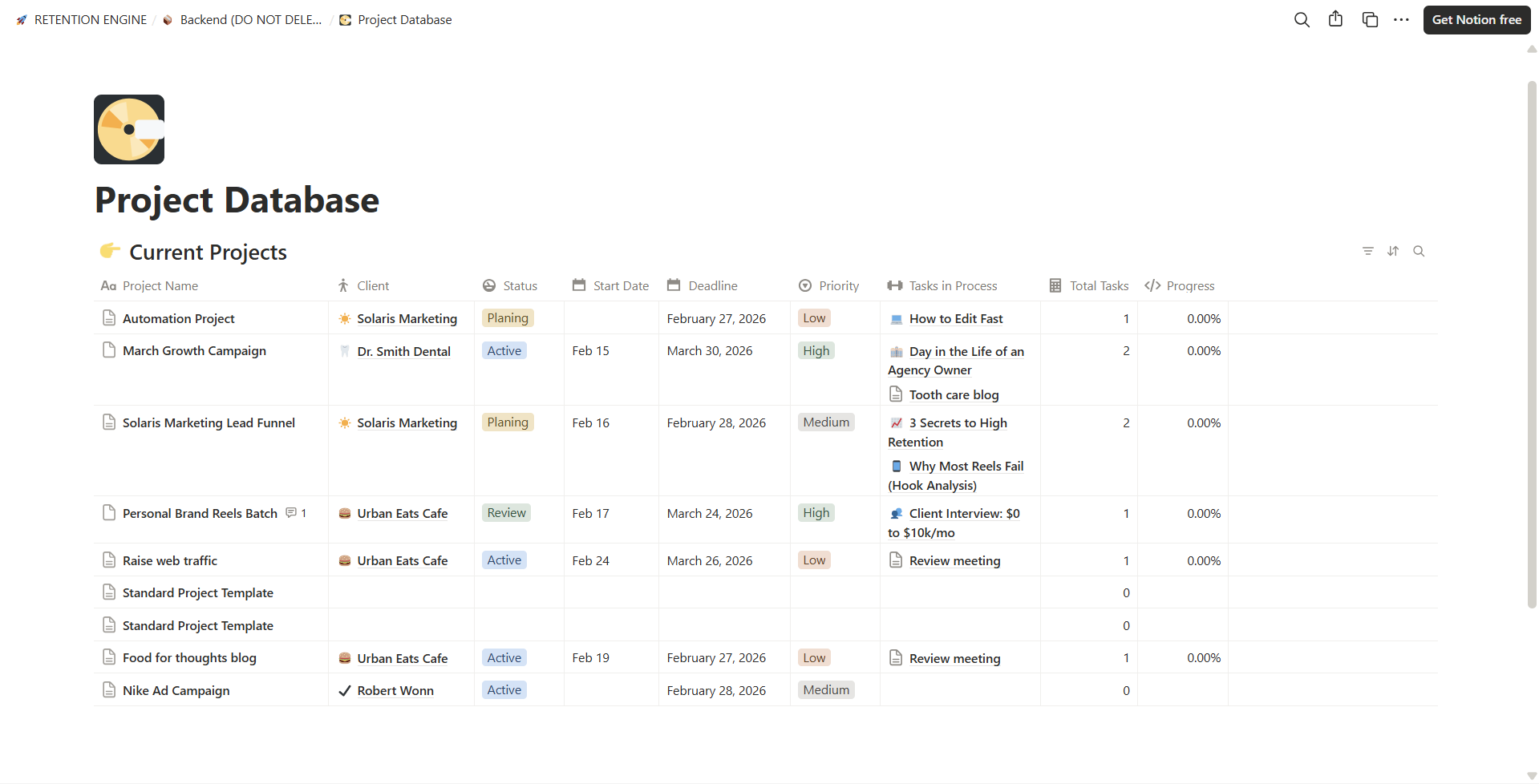
The underlying project layer connecting clients, tasks, deadlines and progress.
Outcome / Learning
The main outcome was a reusable operational framework for managing the moving parts of agency work from one connected workspace.
The project reinforced a broader design principle: good operational systems should reduce the need to search for context. Information should surface where the next decision is being made.
Retention Engine therefore functions less like a collection of Notion templates and more like an operating layer for recurring agency work.